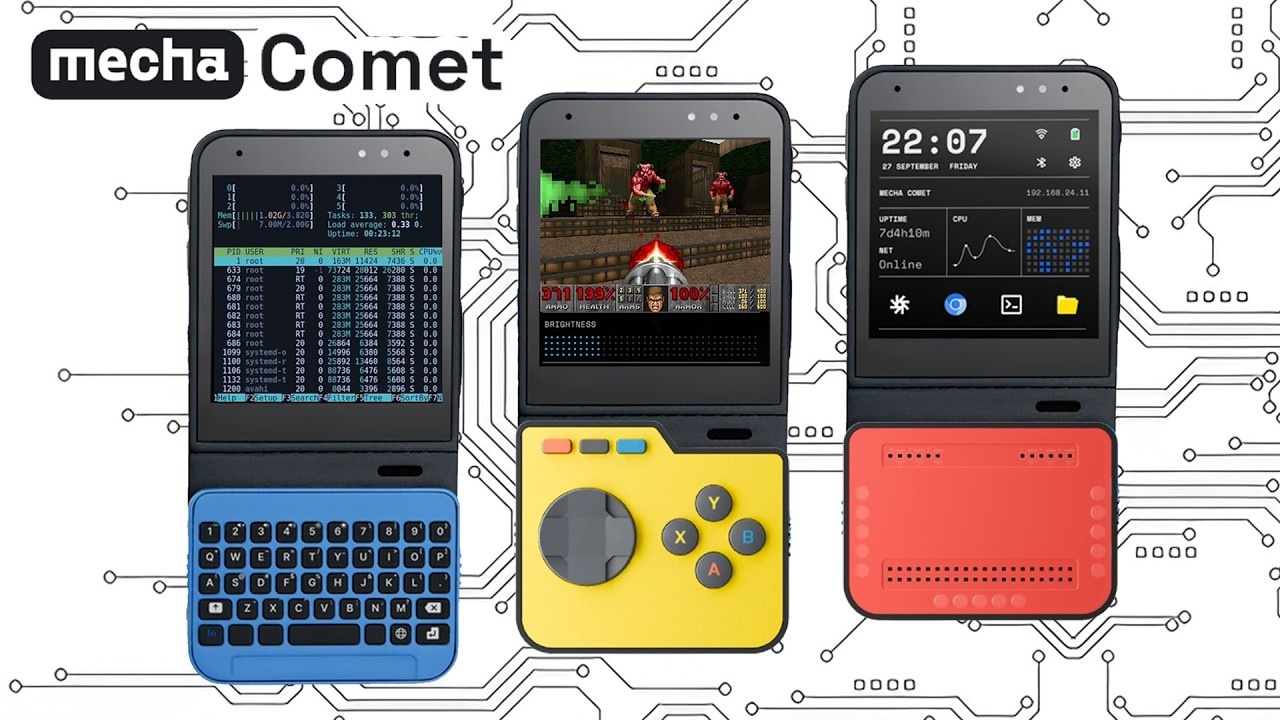
Let’s get this out of the way: Mecha Comet is not your average Linux gadget.

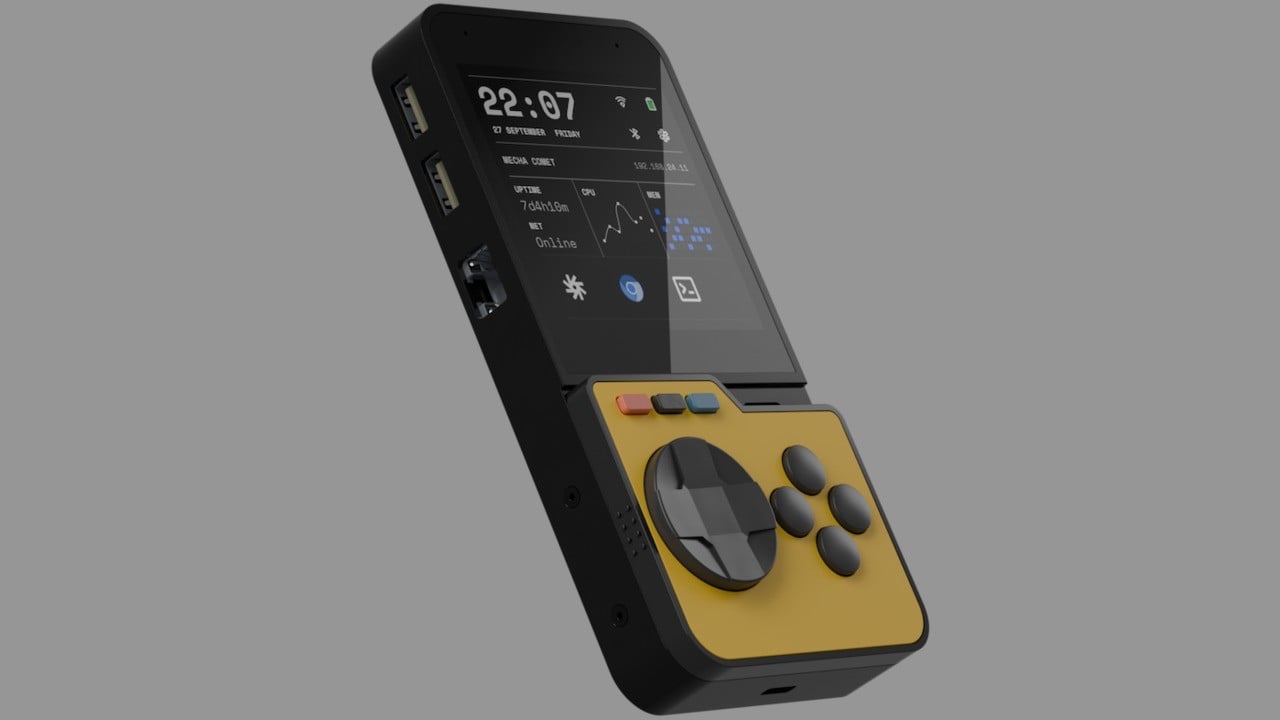
It’s a beautifully chaotic slab of innovation — a modular, palm-sized computer with a full-fledged Debian core, magnetic extension system, PCIe slot, AMOLED touchscreen, and more hardware-level freedom than any Raspberry Pi case mod.
And if you’ve ever said the words “kernel patch” with excitement — this is for you.
Specifications:
• Operating System: Mechanix OS (Debian-based Linux)
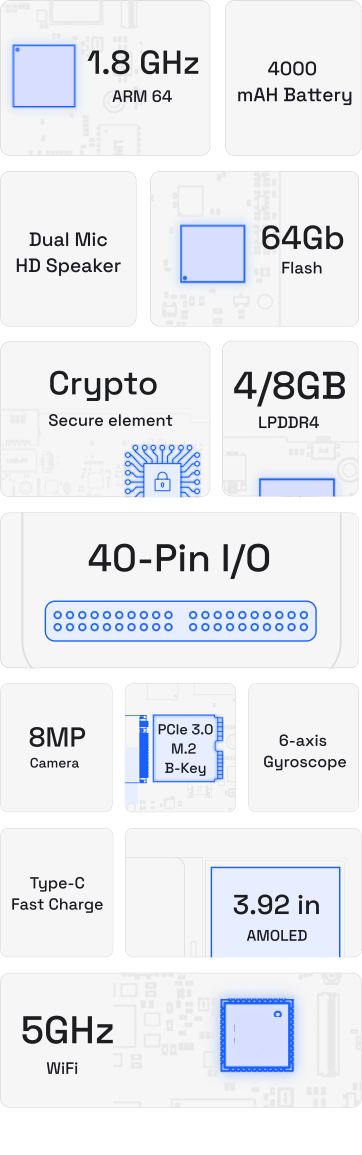
• Processor: NXP i.MX8M Plus – quad-core ARM Cortex-A53 @ 1.8GHz
• GPU: Vivante GC7000UL – supports OpenGL ES 3.1
• RAM: 4GB or 8GB LPDDR4
• Storage: 64GB eMMC Flash
• Expandable Storage: M.2 (B-Key) PCIe 3.0 slot
• Display: 3.92-inch AMOLED (1080×1240), multitouch
• Camera: 8MP autofocus (rear), programmable
• Audio: Dual digital microphones, HD speaker
• Wireless: Wi-Fi 5 (802.11ac), Bluetooth 5.2
• SIM Slot: For LTE modules (requires extension)
I/O Ports:
• 3× USB 3.0 Type-C
• 1× Mini DisplayPort
• Sensors: Gyroscope, RTC, ADC
• Security: Secure Element (EAL 6+), hardware crypto acceleration
• Battery: 4000 mAh Li-ion, 3.8V (replaceable)
• Charging: USB Type-C PD
• Size & Weight: 155mm × 73mm × 14mm, 210 grams
Everything Is Modular (and Magnetic)
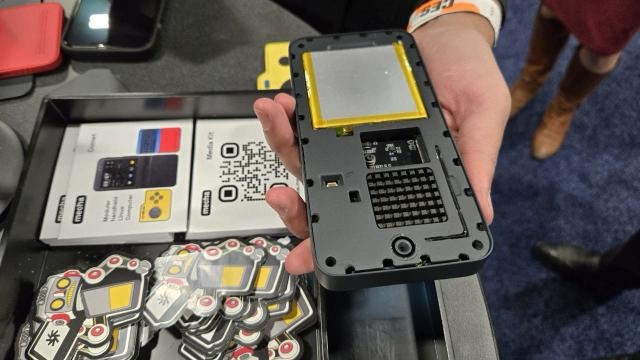
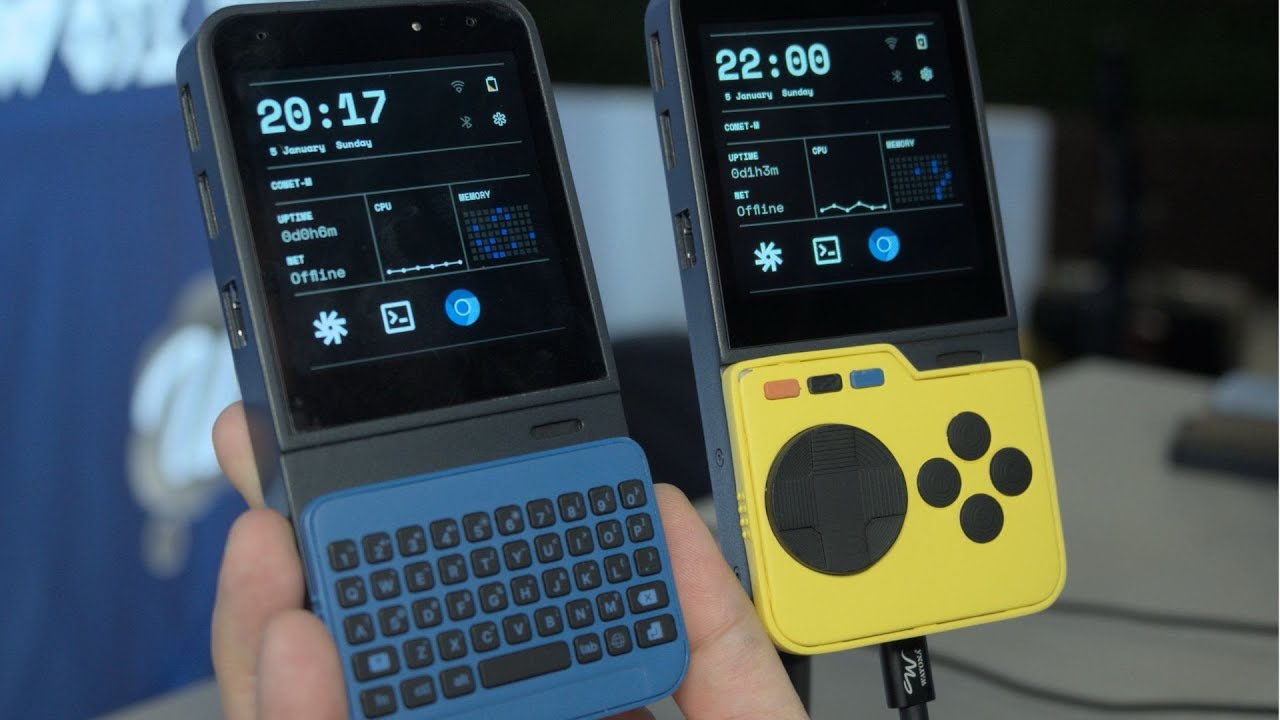
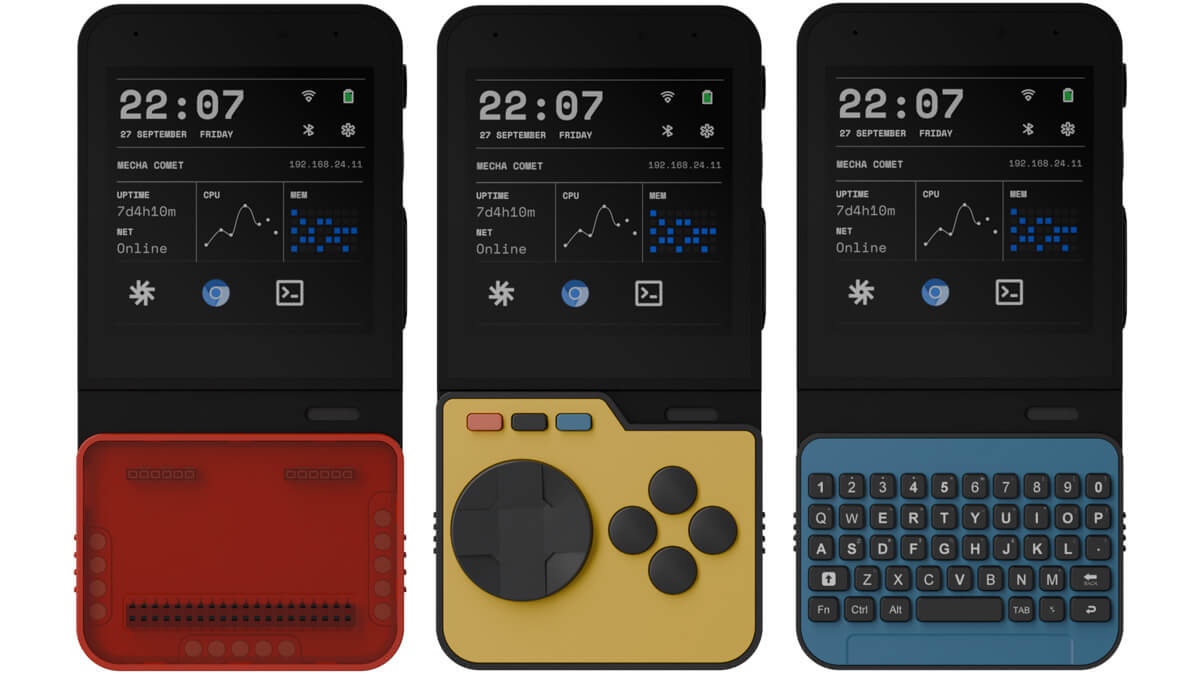
The heart of Mecha Comet isn’t just its silicon — it’s the magnetic expansion interface. Mecha designed a pogo-pin system that lets you snap in and out modules without rebooting.
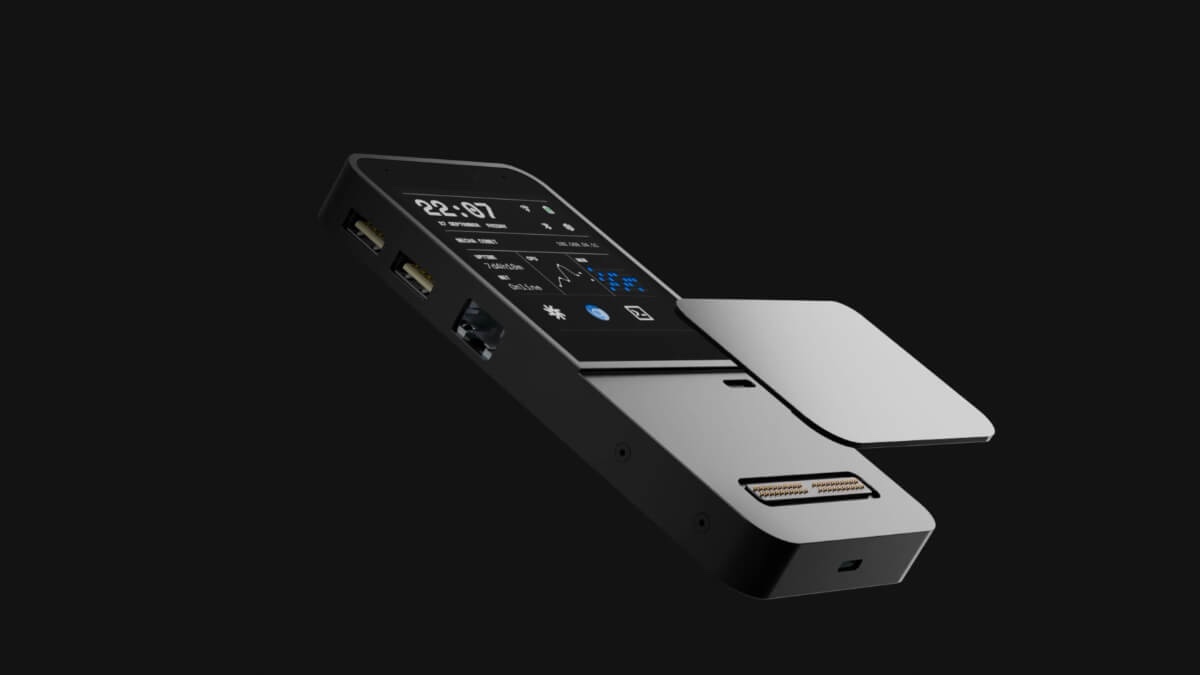
Available extensions (sold separately) include:
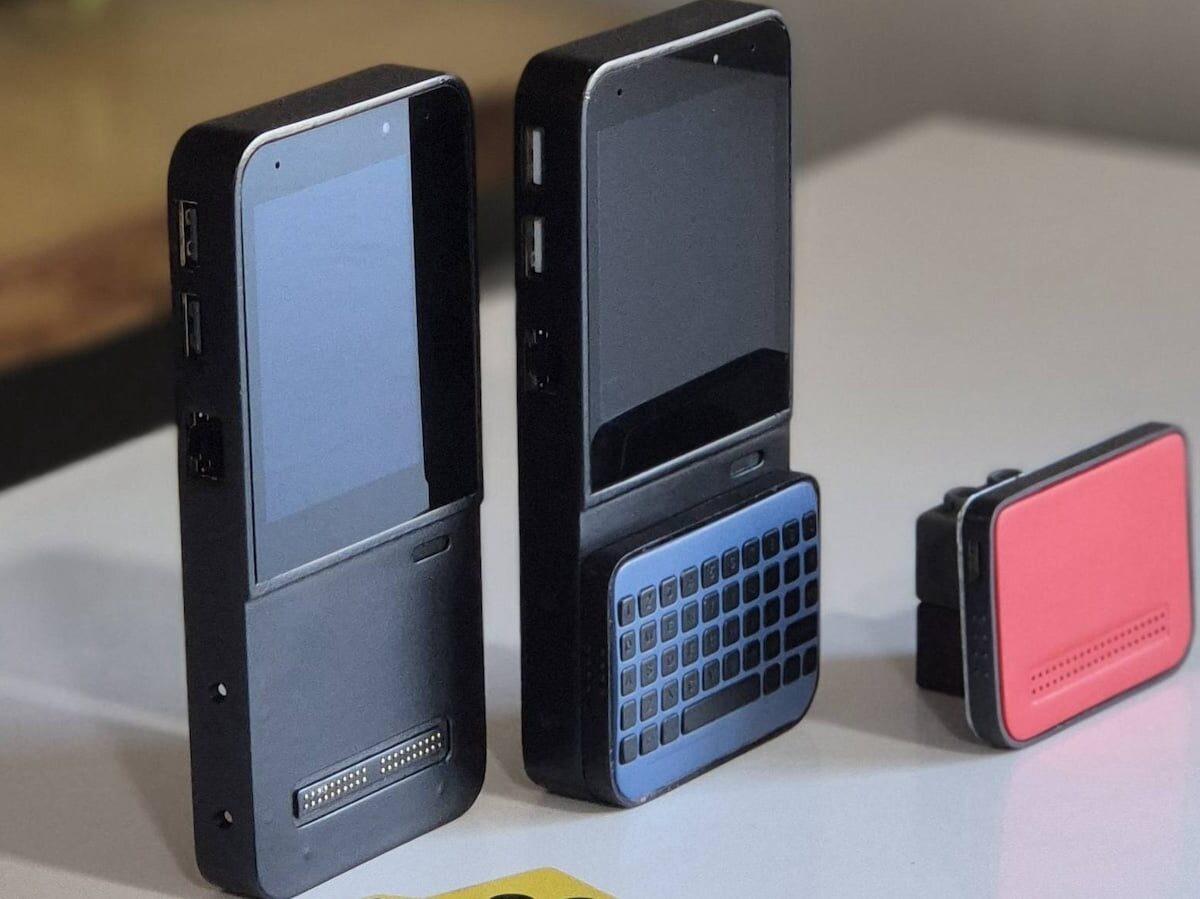
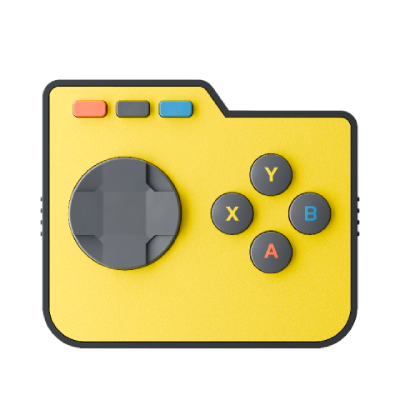
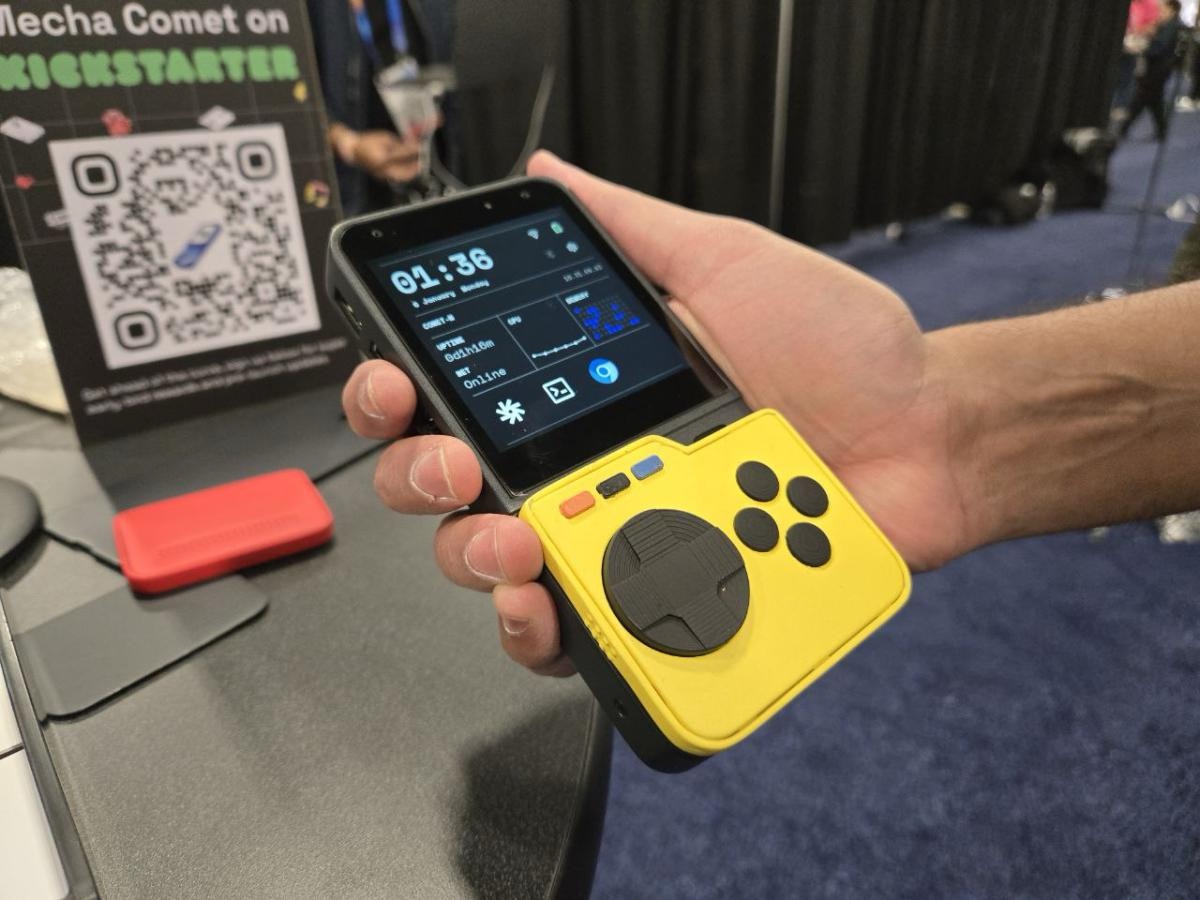
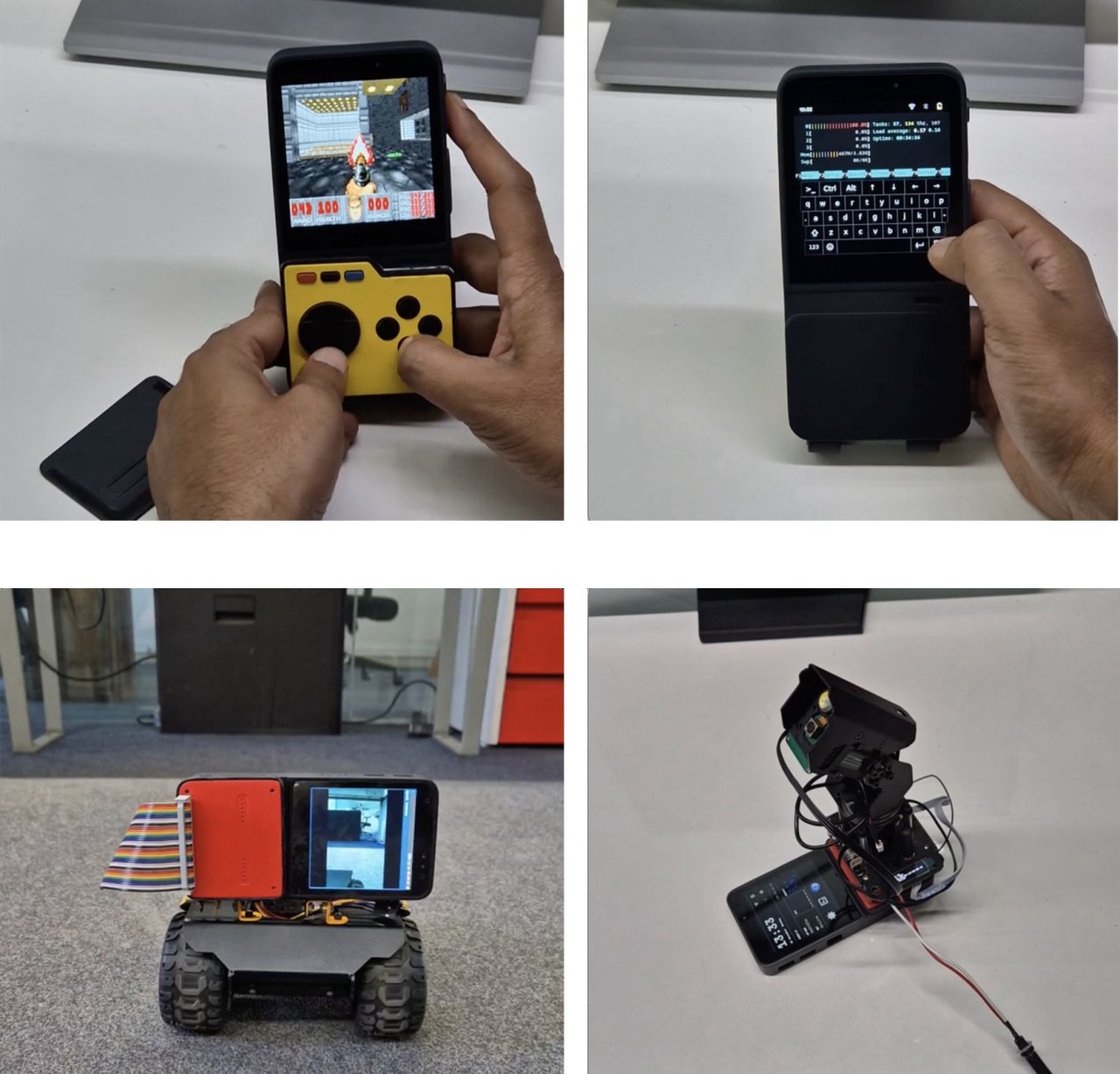
• Gamepad controller (perfect for emulators)
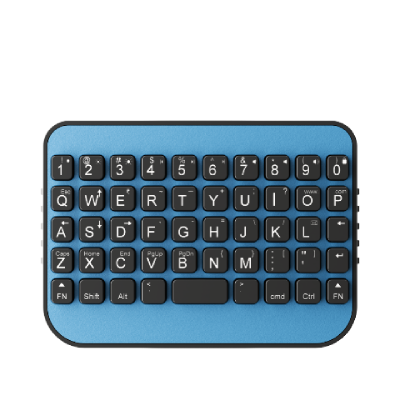
• Thumb keyboard (QWERTY style)
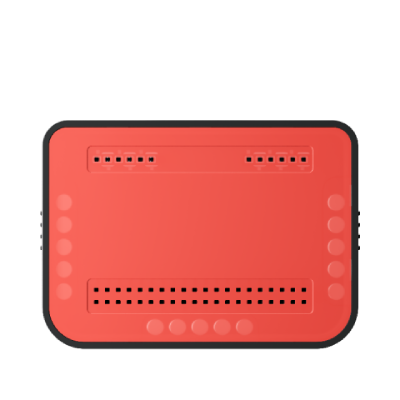
• GPIO breakout board (devs, rejoice)
• LTE modem shell (for global SIM access)
They even provide the CAD files and software documentation so you can build your own. Want to connect a thermal printer? Go for it. Need a spectrometer for field work? Design it.
This isn’t just DIY-friendly — it’s DIY-powered.
Mechanix OS: Lightweight and Rusty (in a Good Way)
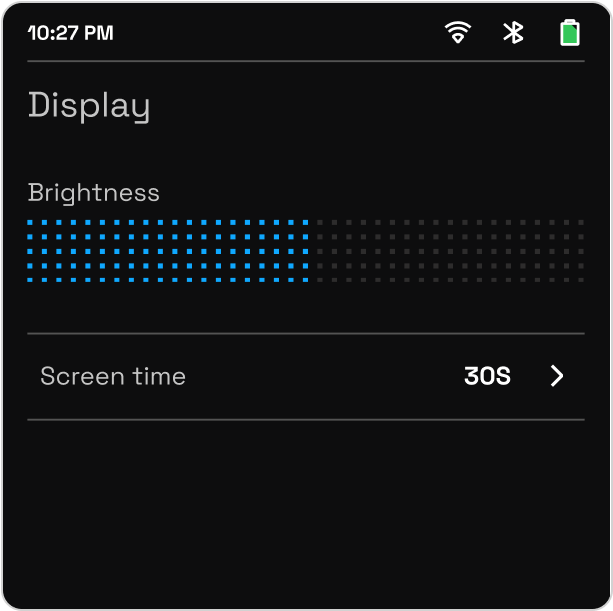
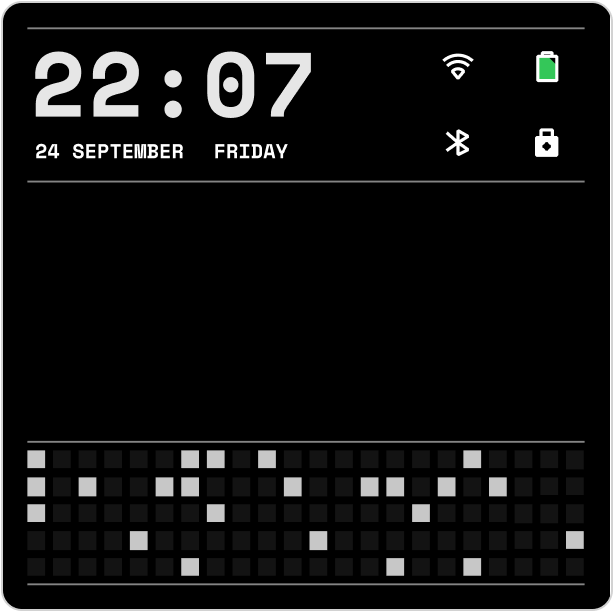
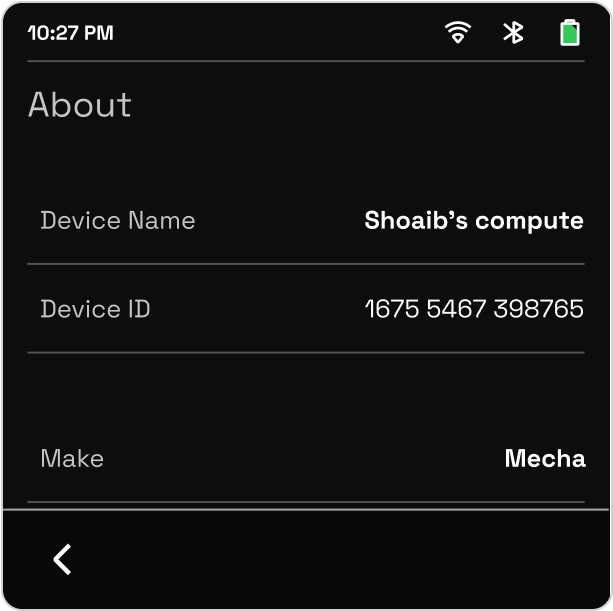
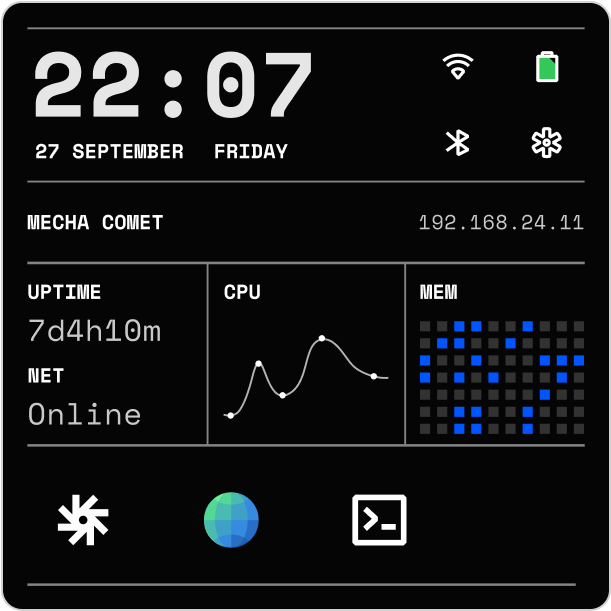
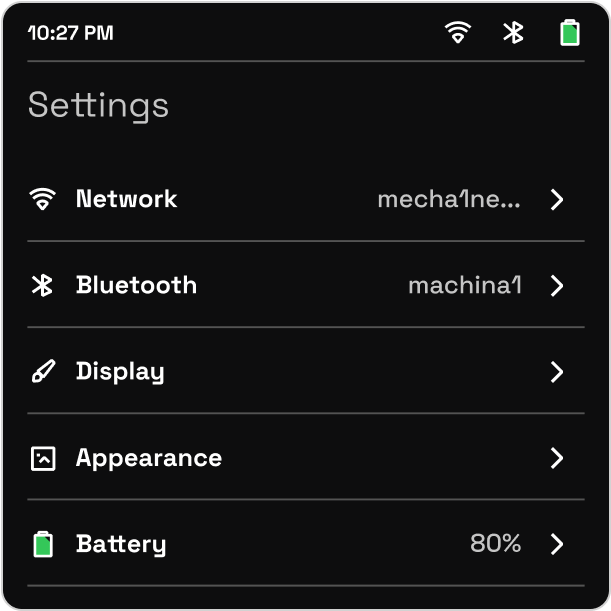
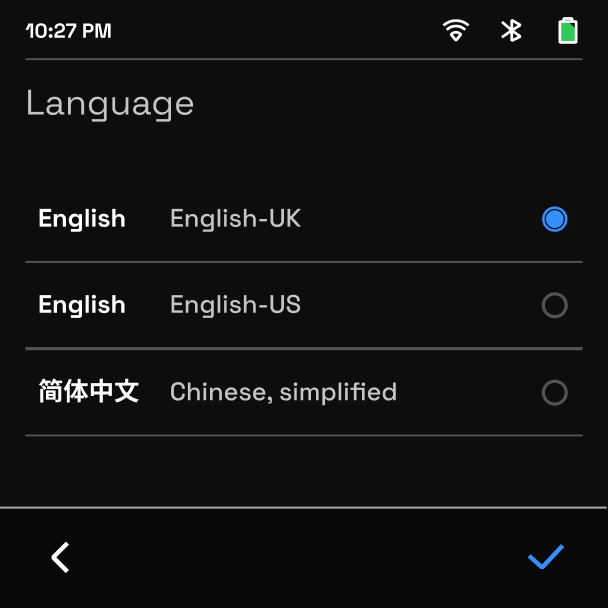
The included OS is Mechanix — a custom Debian distro built for touchscreen control and modular interaction. It boots quickly, supports GPU rendering under Wayland, and includes a homegrown shell written in Rust.
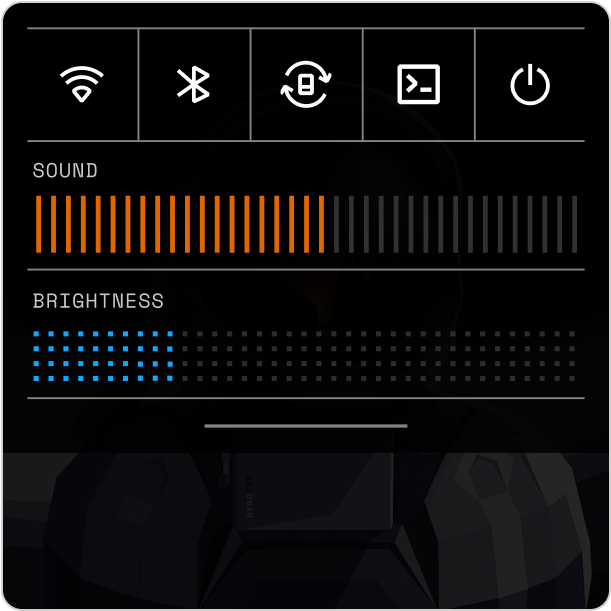
Out of the box, you can:
• Run over 60,000 Debian packages
• Compile on-device (with 8GB RAM)
• Connect to remote systems via SSH
• Use USB gadgets — including mass storage, Ethernet, and HID
• Run X11 or Wayland apps side by side
Mechanix is also open-source, and they actively encourage porting. If you prefer Arch, Alpine, or Fedora — go nuts.

Build, Buttons, and the Feel of It All
Let’s talk form factor.
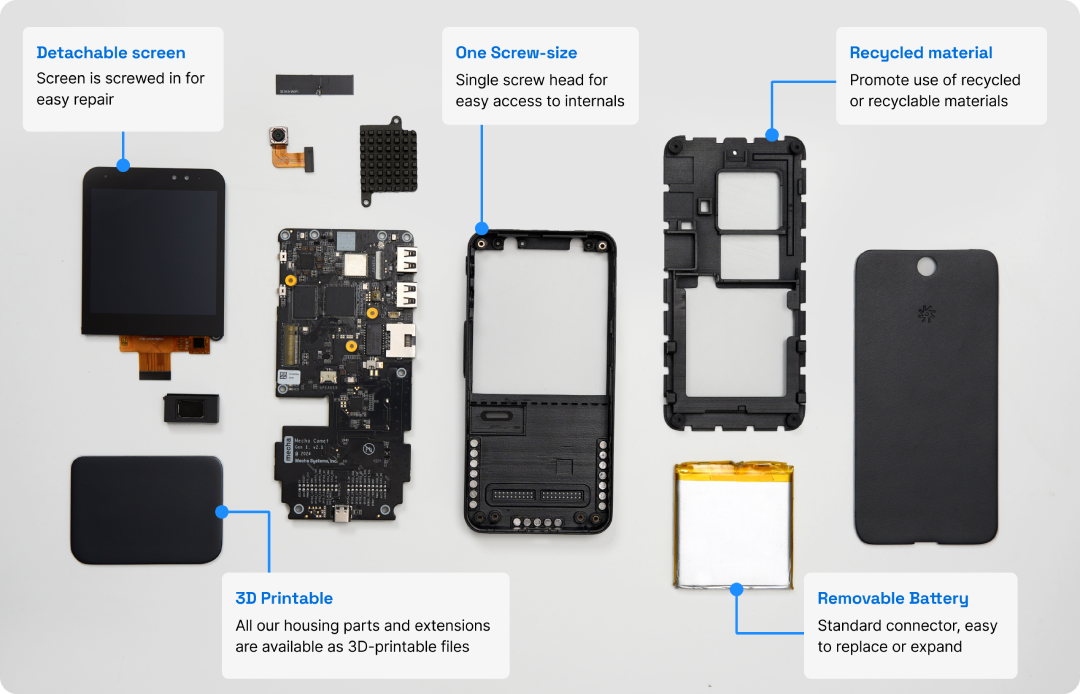
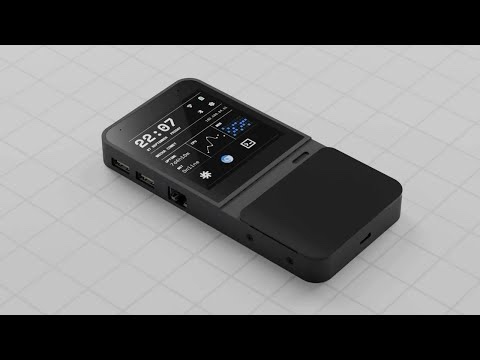
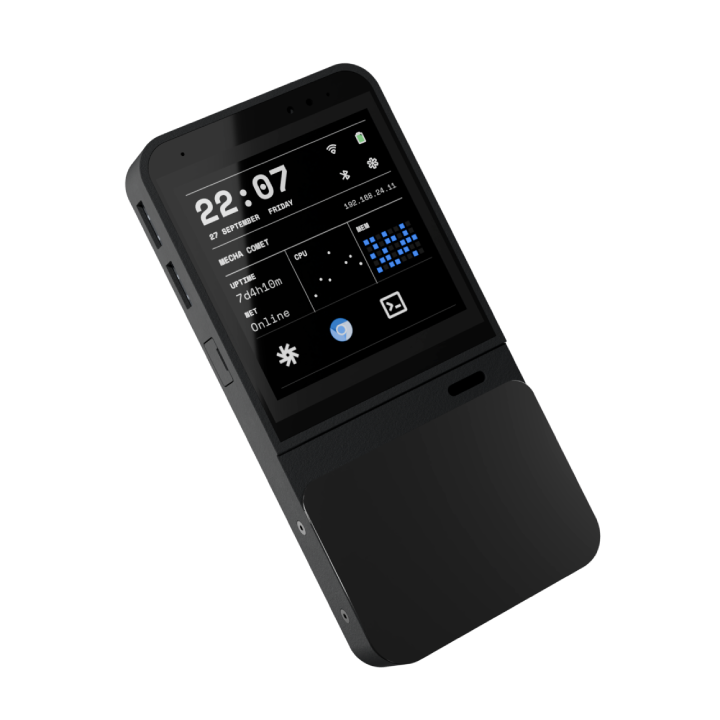
The Mecha Comet feels like something from a sci-fi prop department — matte black plastic, real screws, sharp lines. Not elegant, but honest. Durable. Hackable.

The AMOLED panel is surprisingly crisp for its size, and the vertical resolution makes command-line interfaces feel less cramped. Touch response is fast, even under Wayland.
All three USB-C ports are full-speed 3.0, and the DisplayPort output works with any adapter. Inside, the battery is removable, and yes — you can repair this thing with a screwdriver and a little patience.
This isn’t “throwaway” hardware. It’s tinker-forever hardware.
Real Testing, Real Use
I used Mecha Comet as:
• A mobile dev terminal (tmux + vim + SSH)
• A GPIO tester with LEDs and sensors
• A retro game console (SNES and PS1)
• A Wayland dashboard for remote monitoring
• A stealth USB keylogger emulator (hello HID mode)
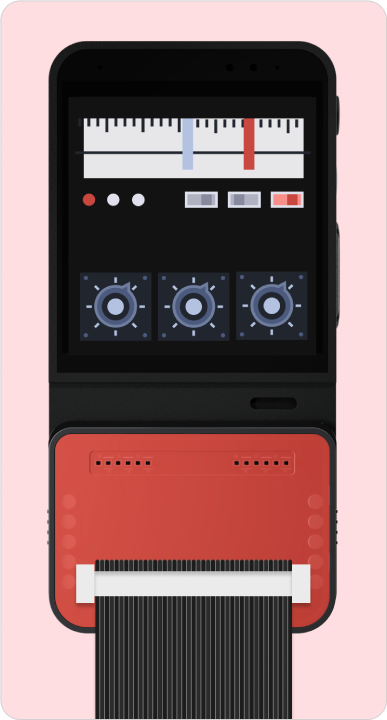
Every module worked. The device never overheated. The boot was fast. Touchscreen was reliable. I even tried it with a USB-C external GPU — not officially supported, but it worked with a kernel patch.
For travel devs, hackers, or Linux lovers, this is like carrying a portable lab in your coat pocket.
Pricing and Availability
• Kickstarter price: from $159
• Extensions: sold separately (each $29–$59)
• Estimated shipping: August–September 2025
• Buy it from:
Final Verdict
The Mecha Comet is a beautiful, unapologetic love letter to open hardware.
It’s not trying to replace your phone or tablet — it’s here to empower creators, coders, engineers, and curious minds. And it does it with real extensibility, real Linux, and no BS.
I give it 4.8 out of 5. I’m keeping mine.
How It Stacks Up
• Vs PinePhone — PinePhone is cheaper and cellular-ready, but less modular and not nearly as fun.
• Vs DevTerm — DevTerm has a built-in keyboard and thermal printer, but it’s bulky and fragile. Mecha Comet is pocketable and tougher.
If you’re choosing between them, ask yourself: do you want a terminal or a toolkit?
What Others Say
“This modular Linux handheld reminds me of the PDA that may have inspired the iPhone.” — TechRadar
“This is like a Game Boy for hackers. A field computer for nerds.” — Reddit /r/linuxhardware
Cons
• No built-in LTE — requires a separate shell
• Extensions sold separately
• Camera only rear-facing
• Availability limited to Kickstarter backers (for now)
FAQ
• Can I install Ubuntu or Arch?
Yes, any ARM64-compatible Linux distro will work.
• Does it support USB-C hubs or displays?
Yes. Fully supports DisplayPort Alt Mode and USB-C hubs.
• Can I use it as a USB HID or Gadget?
Absolutely — HID, Ethernet, mass storage, and more are supported natively.
• Is the OS open source?
Yes. Mechanix OS and shell are both on GitHub.
Video
Hey Berlin, I think you’ll absolutely love it! 😉
4.8 / 5