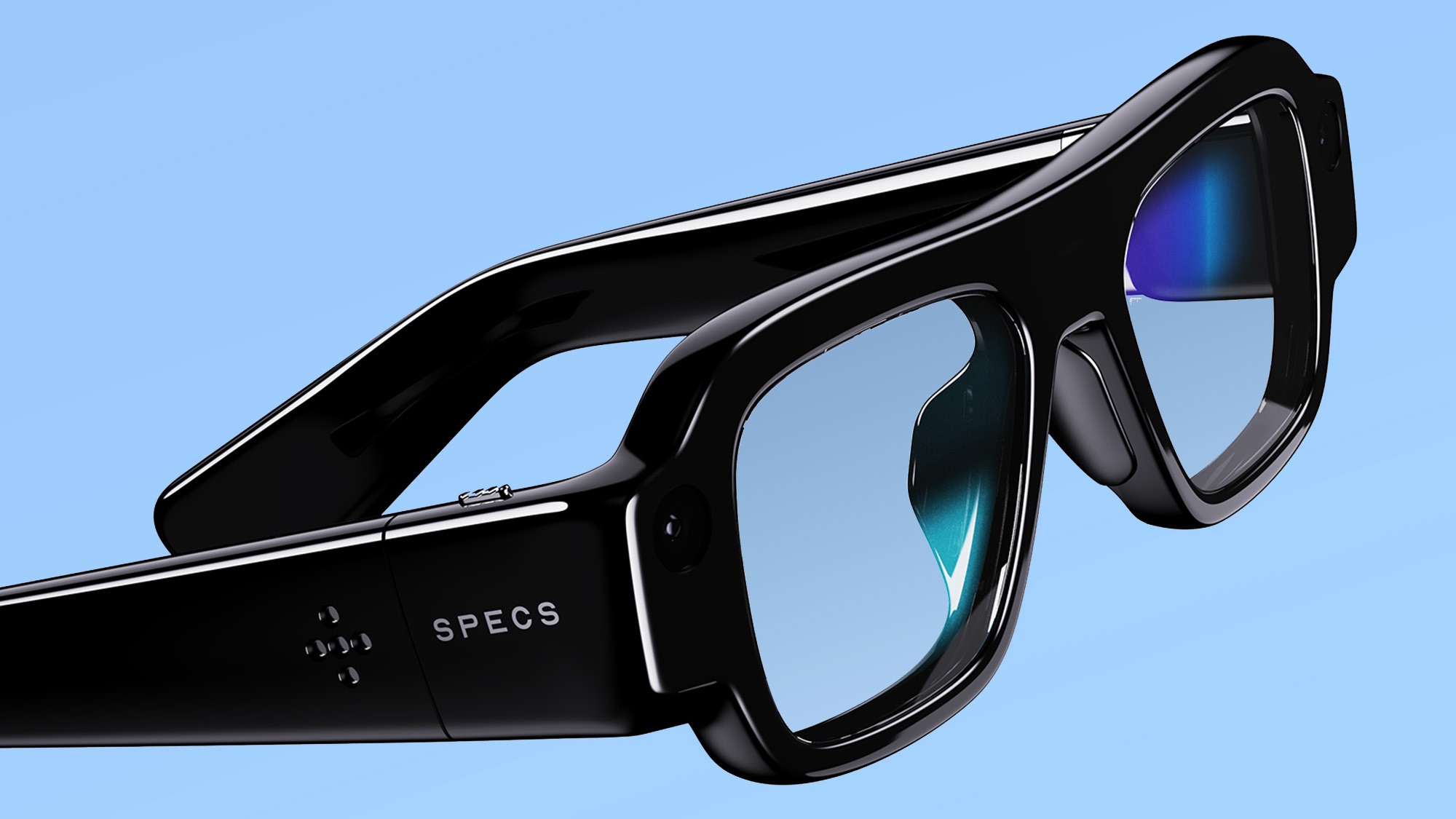
Smart glasses are no longer a futuristic fantasy. In 2025, they’re a real product category — with displays, AI assistants, cameras, and support for full mobile apps. But the problem? Not all glasses that call themselves “smart” deserve the name.
So let’s break it down. We’ll walk through the three major types of smart glasses today, look at what’s truly worth buying, and reveal which model takes the #1 spot of the year.
Three Types of Smart Glasses in 2025: Know the Difference Before You Buy

The market is flooded with “smart” glasses, but in reality, they fall into three very different groups:
• Camera-only glasses with no display
• Display-only glasses that require a cable connection
• Fully independent smart glasses with onboard OS, apps, display, and AI
Only the third category truly deserves the name smart glasses.
Ray-Ban Meta: Stylish, Slick, But Not Smart
Let’s start with the ultra-popular Ray-Ban Meta. These are beautiful, social-friendly glasses that shoot great POV videos. The built-in microphones are solid, and Meta AI is surprisingly responsive.
But here’s the dealbreaker: they have no screen.
No notifications. No AR overlays. No app interface.
Just a camera and a mic in a good-looking frame.
Great for creators, not so great for anyone expecting a futuristic experience.

XREAL & Co: They’re Monitors, Not Smart Glasses
Next, we have XREAL Air and other similar options. These glasses act like portable monitors — you plug them into your laptop, console, or phone, and see a giant floating screen.
Useful? Yes.
Smart? No.
• They require a cable
• They don’t run apps
• No camera, no AI, no OS
It’s just a display — nothing more.

Now Let’s Talk Real Smart Glasses
There’s only one category that actually deserves the “smart” label:
Glasses with a built-in display, camera, assistant, standalone battery, and support for apps. And within that, there are two types:
• Lightweight everyday glasses
• Pro-level smart glasses with more power and features

Lightweight Picks: Realities G1 and Brilliant Labs Frame
Realities G1
Very light, stylish, and practical — Realities G1 might be the smartest choice in the compact category. They’re comfortable on your face, don’t feel like a gadget, and support all the basics:
• Notifications
• Voice assistant
• Clear screen
• Navigation
Everything works out of the box. They’re not a toy and not a beta test — they’re smart glasses built for daily use.
What makes Realities G1 stand out is how naturally they integrate into your daily flow. These glasses don’t scream “tech.” They don’t need to. They’re subtle, discreet, and designed for real-world use — not just product demos. You can wear them all day without attracting stares or feeling like you’re beta-testing someone else’s idea.
They feature a bright, legible display with sharp font rendering and excellent clarity in both indoor and outdoor settings. Unlike many lightweight models, there’s no rainbow fringing, no ghosting, and no painful eye strain after extended use. Just reliable visual output that feels, frankly, refreshing.

Notifications are timely and glanceable, just like on a smartwatch — but even more seamless. The voice assistant responds quickly, accurately, and contextually. You can ask for directions, dictate messages, or check the weather while walking, cycling, or even during meetings. The UI is minimalistic and doesn’t get in the way.
Battery life? Impressive. These glasses will easily last a full workday with light to moderate use. You won’t find yourself constantly reaching for a charger — a real plus if you’re always on the move.
Realities G1 may not be the flashiest glasses on the market, but that’s the point. They’re refined, thoughtful, and built for people who want their tech to enhance reality — not replace it. In a sea of overhyped concepts, they feel honest. And they work.

Brilliant Labs Frame Ai
A beautiful disaster.
These glasses look incredible. Transparent frames, futuristic lines, art direction straight from a sci-fi film. The marketing? Impeccable.
But once you turn them on, the illusion collapses.
• The display feels like it’s from 2009
A prismatic mess. Letters trail light beams. Text shimmers and smears. What’s advertised as a “color display” looks more like an 8-bit LED belt from a music festival.

• Camera? Technically, yes
But don’t expect to take photos or videos. Recognition barely works, especially in low light. It’s there for decoration.
• Language support? English only
After a year on the market, they still don’t support multilingual use. You can’t even see answers in other languages on screen.
• Apps? Practically non-existent
There’s no app store. Only random APKs from indie developers — poorly optimized, launched through awkward side loaders, and deeply unstable.
• Notifications? Nope
They don’t exist. At all. The glasses don’t tell you anything about what’s happening on your phone. Zero integrations.
• Official support’s response?
“These glasses are for developers only. We don’t plan to add consumer-level features. We use them for ourselves.”
Translation: they’re not even trying.
So who should buy Brilliant Labs Frame?
Only those who want to look cool and occasionally ask ChatGPT for first-date tips — nothing more. They’re a gorgeous accessory, but a complete failure as a product.

Pro-Level Smart Glasses: RayNeo X3 Pro and INMO Air 3
RayNeo X3 Pro
This is raw AR power.
These glasses run full Android, launch any APK, support hand tracking, and feature a custom XR2 chip optimized for spatial interfaces. Great for developers, hackers, and early adopters.
But there are limits:
• Heavy and bulky
• Only 1–2 hours battery life
• 12 MP camera is AR-focused, not for photo/video
Great at home or in short sprints. Not ideal for all-day use.

INMO Air 3 — The Best Smart Glasses of 2025
This is it.
INMO Air 3 isn’t just a great product — it’s a smart glasses breakthrough.
• Incredibly light — just around 80 grams
• 16 MP camera — stunning clarity, ideal for vloggers and travelers
• Full HD display — crisp, readable, and immersive
• Up to 5 hours of battery life — no cables needed
• Supports 99% of Android apps — TikTok, Telegram, Maps, even Gmail
• AI assistant — voice-controlled, reliable, fast
• Triple monitor mode — connect to your PC and see 3 screens at once
• Minimalist design — looks like normal glasses, not a sci-fi prototype
But beyond the features, what really matters is this: they work.
No bugs. No hacks. No unfinished UI. These glasses just do what they promise, and do it well.
INMO Air 3 is the first smart glasses product that feels complete, refined, and ready for real users — not just developers and dreamers.
You don’t need to root it. You don’t need to flash firmware. You just wear it, and it works.

When Can You Buy Them? Right Now.
The first batch of INMO Air 3 starts shipping on May 13 (5.13)— yes, just like 513.toys!
We’ve already ordered a pair, so stay tuned — unboxing and full review are coming next week.

Final Verdict: What to Buy in 2025
• Ray-Ban Meta — for POV content creators
• XREAL — for cable-based screen lovers
• Realities G1 — for practical, lightweight smart use
• RayNeo X3 Pro — for developers and AR enthusiasts
• INMO Air 3 — for literally everyone else
They’re light, powerful, fully featured, and finally bring the promise of smart glasses to life.
Not a gimmick. Not a prototype. Just a great product — that fits in your pocket, and changes how you see the world.
INMO Air 3 is the best smart glasses of 2025 Period.